
The federal battery rebate that replaced Vic's battery loan.
The Cheaper Home Batteries Program opened on 1 July 2025. It gives you approximately $252 per usable kWh off eligible home batteries at the point of sale. For a 10 kWh install, that's roughly $2,520 off. It applies whether you have solar already or install solar and battery together. Figures checked against the Clean Energy Regulator on 9 September 2026. The rate steps down again on 1 January 2027, see the key dates below.
This is now the battery path in Victoria.
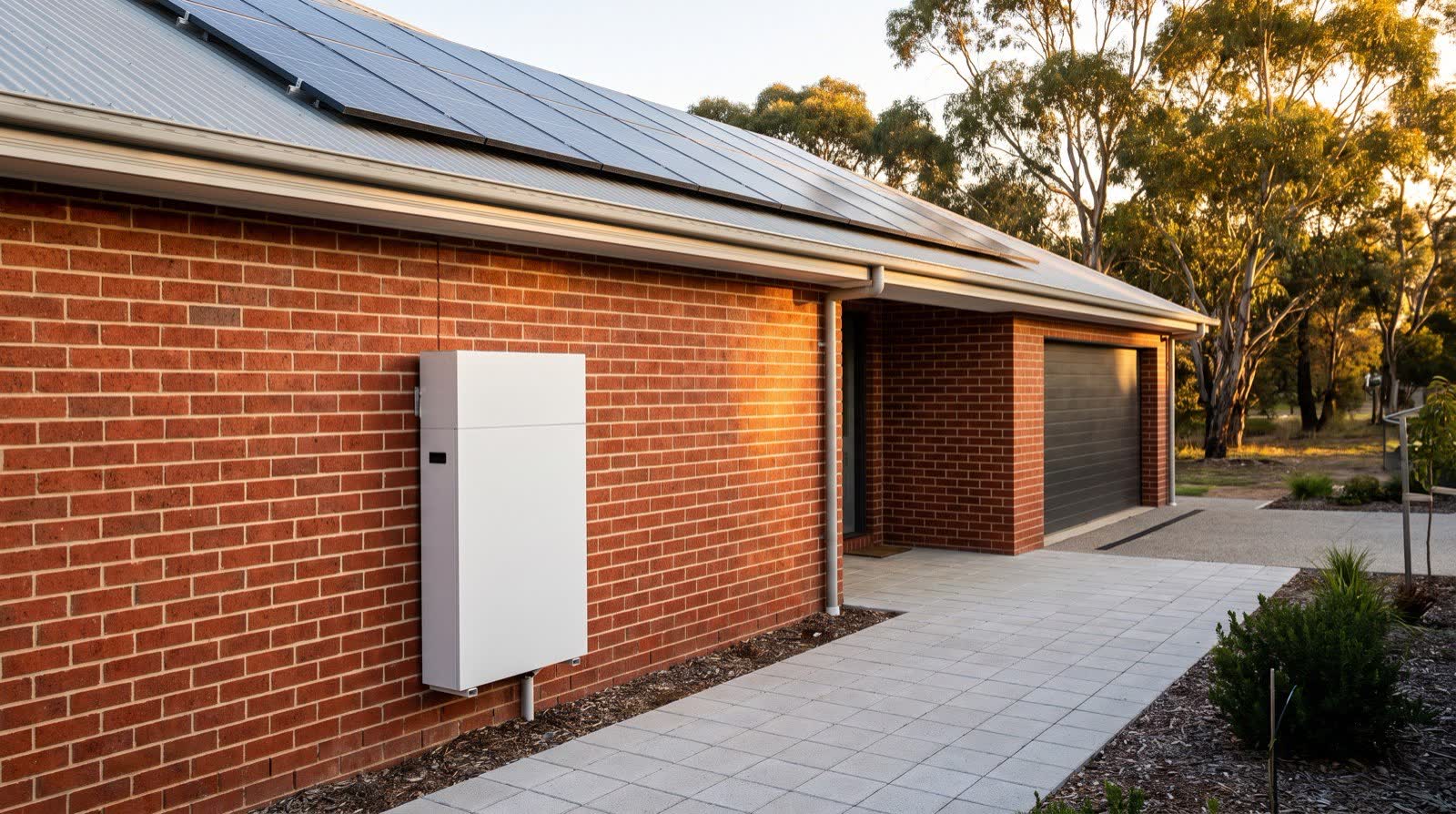
Solar Victoria closed the state interest-free battery loan to new applications. The federal Cheaper Home Batteries Program is the current pathway for battery incentives in Victoria. Any competitor still advertising an $8,800 Vic battery loan is running stale copy.
What the $252/kWh works out to.
| Battery size (usable kWh) | Typical household | Federal rebate value |
|---|---|---|
| 6 kWh | Small home, 1-2 people | ~$1,512 |
| 10 kWh | Family home, 3-4 people | ~$2,520 |
| 13.3 kWh (Alpha ESS) | Family + EV or heavy evening use | ~$3,352 |
| 26.6 kWh (2 × 13.3 kWh) | Large home or 2 EVs | ~$5,430 |
Values are indicative at a certificate price of around $37. The full rate applies to the first 14 kWh of usable capacity and 60% of it from 14 to 28 kWh, which is why the 26.6 kWh figure is not simply double the 13.3 kWh one. Your itemised quote confirms the exact figure for the specific battery model.
How the battery rebate steps down, 2026 to 2028.
The discount is set by an STC factor per usable kWh that the Clean Energy Regulator steps down on a fixed schedule. The dollar columns assume a certificate price of around $37, so treat them as ballpark. Your install date, not your quote date, decides the rate.
| Install period | STC factor per usable kWh | Approx. value per kWh | Approx. rebate on 10 kWh |
|---|---|---|---|
| 1 Jan to 30 Apr 2026 | 8.4 | around $310 | around $3,100 |
| 1 May to 31 Dec 2026 (now) | 6.8 | around $252 | around $2,520 |
| 1 Jan to 30 Jun 2027 | 5.7 | around $211 | around $2,110 |
| 1 Jul to 31 Dec 2027 | 5.2 | around $192 | around $1,920 |
| 1 Jan to 30 Jun 2028 | 4.6 | around $170 | around $1,700 |
| Usable battery size | Approx. rebate now | Approx. rebate from 1 Jan 2027 | Difference |
|---|---|---|---|
| 10 kWh | around $2,520 | around $2,110 | about $410 less |
| 13.3 kWh (Alpha ESS) | around $3,350 | around $2,800 | about $550 less |
| 16 kWh | around $3,830 | around $3,210 | about $620 less |
| 26.6 kWh (2 x 13.3 kWh) | around $5,430 | around $4,550 | about $880 less |
Program detail sits with the federal Department of Climate Change, Energy, the Environment and Water. Victoria has no state top-up to stack on this: Solar Victoria's battery loan is closed to new applications.
Cheaper Home Batteries Program, common questions.
What is the Cheaper Home Batteries Program?
A federal Australian government program that opened on 1 July 2025. It provides a point-of-sale discount of approximately $252 per usable kWh on eligible home batteries. It replaces the closed Victorian battery interest-free loan as the primary Vic pathway for battery incentives.
How much is the solar battery rebate in Victoria in 2026?
Approximately $252 per usable kWh at current certificate values, through the federal Cheaper Home Batteries Program. For a typical 10 kWh battery that's roughly $2,520 off. For a 13.3 kWh Alpha ESS install, about $3,350 off. Value is applied by the installer at the point of sale. There's no separate Victorian state battery rebate anymore; this federal program is the battery incentive for Victoria.
Is the Cheaper Home Batteries Program available in Victoria?
Yes. It's a federal program administered through the Small-scale Renewable Energy Scheme (SRES). Victorian homes are fully eligible. It applies whether you have existing solar or install solar and battery together.
Do I need existing solar to qualify?
No. The Cheaper Home Batteries Program applies to both new-solar-plus-battery installs and battery-only installs on existing solar. Your installer confirms eligibility for your specific battery model.
What batteries are eligible?
Batteries listed on the Clean Energy Council Approved Products List. Popular eligible options include Alpha ESS, Foxess, Tesla Powerwall, Sungrow, and BYD. Your quote will confirm which models qualify for your setup.
Can I stack the Cheaper Home Batteries Program with Solar Homes?
Yes. The federal Cheaper Home Batteries Program stacks with Solar Homes for the solar panels portion of a combined solar+battery install. On the battery itself, it's the federal program. On the panels, it's Solar Homes plus federal STCs.
When does the solar battery rebate end?
The Cheaper Home Batteries Program is legislated through to 2030, but the discount steps down on a fixed schedule set by the Clean Energy Regulator. The STC factor is 6.8 per usable kWh for installs from 1 May to 31 December 2026, then 5.7 from 1 January 2027, 5.2 from 1 July 2027 and 4.6 from 1 January 2028. On a 10 kWh battery that is roughly $2,520 off now and about $2,110 off from January 2027. The certificate price itself also moves with the market. Installing earlier locks in the higher rate.
How much will the battery rebate drop on 1 January 2027?
The STC factor falls from 6.8 to 5.7 per usable kWh, a cut of about 16%. At a certificate price of around $37 that takes a 10 kWh battery from roughly $2,520 off to about $2,110 off, a 13.3 kWh battery from about $3,350 to about $2,800, and a 26.6 kWh system from about $5,430 to about $4,550. The install date, not the quote date, decides which rate applies.
Go deeper.
- Tidy Battery, how the actual battery bit works
- All Vic rebates stacked, the full incentive picture
- Rebate calculator, estimate battery + solar together
- Vic solar rebate 2026, for the solar side of a combined install
60 seconds to see your rebate.
Postcode + battery interest. We'll ring to lock in a time and that's it.
Get my tidy quote